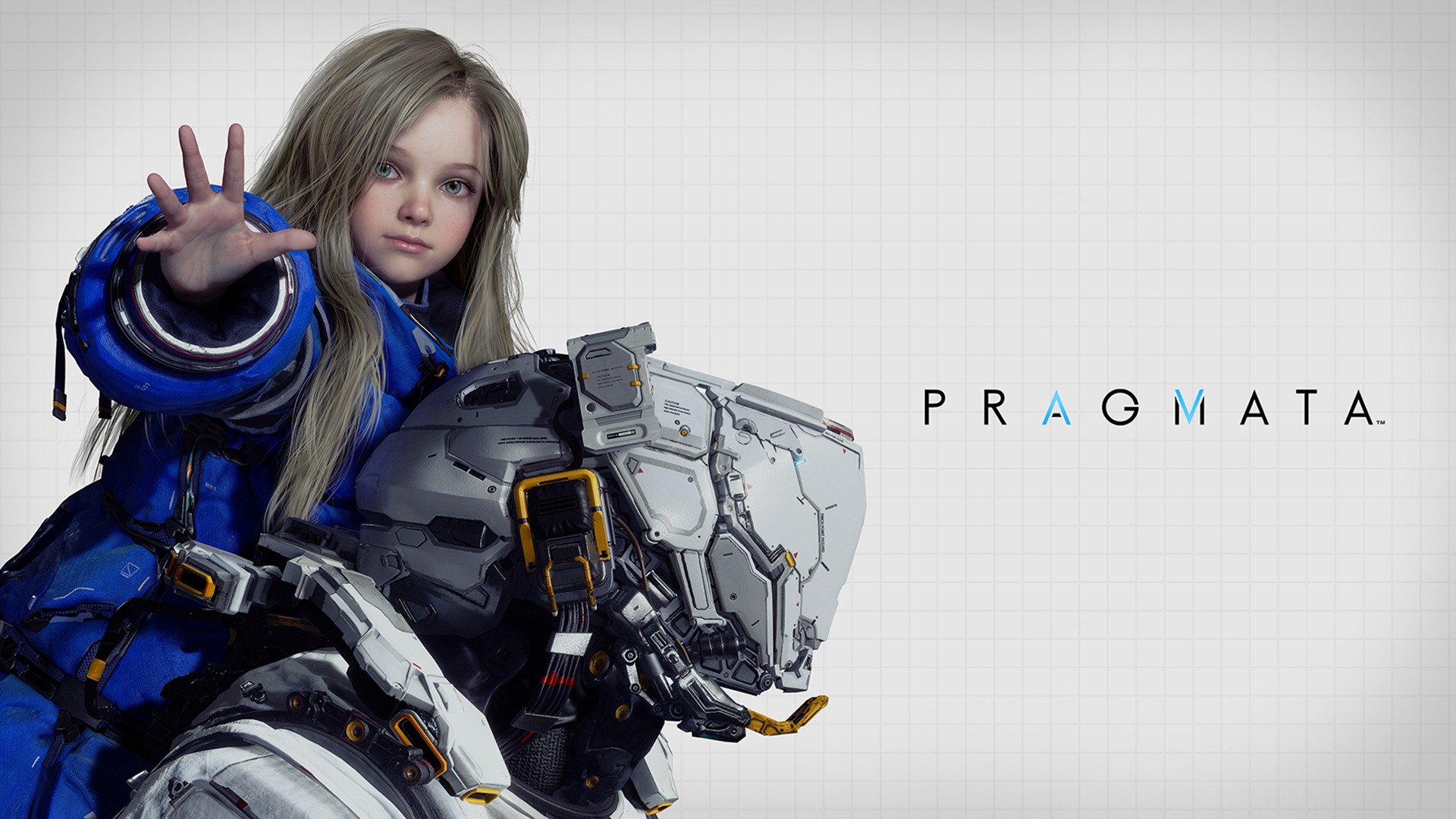
Pragmata Review
My Pragmata review begins with a game that has spent years surrounded by mystery, delays and growing expectations. Thankfully, Capcom’s finished product proves the long wait was worth it. This science-fiction adventure takes place inside a lunar facility controlled by a dangerous rogue intelligence. Hugh, a member of an investigation team, becomes stranded within this hostile environment. He soon meets Diana, a young android with powerful hacking abilities. From there, their survival depends on teamwork, trust and finding a way back to Earth.
I spent around 19 hours with the game. That included collecting every major upgrade and taking my time to explore its environments. My playthrough was longer than a straightforward run through the main story, but it rarely felt wasted. Pragmata is visually impressive, mechanically distinctive and consistently enjoyable. It also delivers an emotional ending which nearly pushed my score towards a nine. The only thing holding it back was my connection with the central characters. Hugh’s and Diana’s relationship works, but it never became quite strong enough to reach the next level.
As a result, this Pragmata Review awards Capcom’s lunar adventure a very respectable 8/10.

Two characters working as one
Pragmata’s defining feature is its unusual combination of hacking and third-person shooting. Hugh provides the movement, weaponry and physical strength needed during each encounter. Meanwhile, Diana hacks enemy systems and exposes otherwise protected weak points. Both characters operate together, rather than appearing within separate gameplay sections. Initially, dividing your attention between both systems can feel slightly overwhelming. You must move safely, monitor incoming attacks and complete hacking sequences simultaneously. However, the controls gradually become natural as the game introduces additional possibilities. Soon, hacking becomes more than a simple step before firing your weapon. Instead, it becomes an important tactical tool during every substantial encounter.
Enemies can be defeated through conventional shooting alone. However, this approach is usually slower and far less effective. The intended gameplay loop begins with Diana breaking through an enemy’s protection. Hugh can then concentrate his firepower upon the newly exposed weak point. Therefore, every battle requires observation, timing and controlled aggression. This structure prevents the combat from becoming another conventional third-person shooting experience. Furthermore, new enemies force you to reconsider familiar tactics throughout the campaign. Some situations prioritise movement, while others reward careful weapon selection. Boss encounters push these mechanics further and demand confident use of both characters. As a result, the combat remains engaging throughout most of the adventure.
A beautiful and lonely lunar world
Pragmata’s lunar setting is one of its greatest achievements. The abandoned facility feels technologically advanced, yet strangely cold and unsettling. Detailed machinery fills its corridors, while distant views create an impressive sense of scale. Moreover, the contrasting images of Earth provide a constant reminder of the duo’s isolation. Capcom has created a location which feels believable without becoming visually predictable. Sterile laboratories sit beside damaged industrial areas and increasingly surreal spaces. Consequently, each new section offers another reason to pause and examine the scenery. I regularly slowed down simply to appreciate the lighting and environmental details. That partly explains why my playthrough reached 19 hours. Nevertheless, the slower pace helped me appreciate the work behind this world. The graphics are superb, particularly when reflective surfaces meet the facility’s dramatic lighting. Character models also contain an impressive amount of mechanical and material detail. Additionally, Hugh’s suit communicates weight without making movement feel unreasonably restricted. Diana’s bright appearance provides an effective contrast against the darker surroundings.
The soundtrack deserves equal praise. Its music strengthens the quieter moments without overwhelming them. However, it also rises confidently during larger encounters and important story sequences. Together, the visuals and music create a powerful atmosphere from beginning to end.
Pragmata Review: Exploration and progression
The facility contains optional routes, useful resources and upgrades for observant players. Therefore, leaving the most obvious path can provide worthwhile rewards. These diversions also encourage players to engage with the location beyond its combat arenas. Progression remains understandable and avoids burying players beneath excessive statistics. Instead, upgrades generally provide noticeable improvements or welcome tactical options. That simplicity suits the game’s focused approach. It also makes experimentation easier when preparing for tougher encounters.
However, Pragmata occasionally reveals the limitations of its structure. Some areas can feel slightly constructed around combat rather than natural exploration. Likewise, certain encounters reuse familiar ideas without transforming them significantly. Fortunately, the central hacking mechanic remains strong enough to carry these moments. The campaign also understands when to introduce a larger confrontation. Its biggest battles feel appropriately dramatic and unmistakably Capcom. In particular, the final stretch builds towards an enormous, mutated threat. That crescendo feels familiar for the publisher, yet it remains entertaining and satisfying.
Hugh and Diana needed more time
The relationship between Hugh and Diana sits at the emotional heart of Pragmata. Their reliance on one another gives you an immediate reason to care about their survival. As the story progresses, their conversations reveal a growing affection beneath their practical partnership. Diana brings warmth and curiosity to an otherwise cold and lonely setting. Hugh, meanwhile, offers protection, experience and a grounded human perspective. Their dynamic works well, and several of the quieter moments are genuinely touching.
Even so, I wanted their relationship to develop more deeply across the campaign. They share several important experiences, but some of the emotional progression feels underexplored. Because of that, the ending asks for a stronger connection than the journey has fully earned. That does not mean the conclusion falls flat. Far from it. The final scenes are genuinely sad and came very close to bringing a tear to my eye. The emotional impact also lands well after the spectacle of the final boss.
Still, a powerful ending cannot entirely make up for limited character development earlier in the story. I understood what the game wanted me to feel, and I did feel much of it. Yet I needed a stronger bond with Hugh and Diana for the game to reach a nine. A few more personal scenes could have made a huge difference. More conversations outside the immediate struggle for survival might also have added greater emotional depth. Ultimately, Pragmata tells an effective story without quite reaching the highest level of narrative impact. That is what separates an excellent game from a truly exceptional one.

Is Pragmata worth playing?
Pragmata is a polished and imaginative adventure set within a memorable science-fiction world. Its combination of hacking and shooting gives the combat a clear identity, while the lunar setting highlights Capcom’s technical and artistic confidence. The soundtrack is excellent, and the progression remains focused without becoming overly complicated. More importantly, Pragmata rarely feels like it is copying another modern release. There are some familiar influences, but its core mechanics give the game a distinctive personality. There is additional content available after completing the main campaign. Even so, I felt satisfied after collecting the upgrades and finishing the story. For now, I am happy to put Pragmata back on the shelf.
That should not be taken as disappointment. Instead, it reflects how complete and rewarding the first playthrough felt. I thoroughly enjoyed my time with the game, and its final moments will stay with me. The only thing holding it back is the character development. Hugh’s and Diana’s relationship never quite reaches the same level as the combat, visuals and presentation. With a stronger emotional bond between them, Pragmata could easily have earned a nine. As it stands, it remains a confident, beautiful and highly enjoyable adventure.
Pragmata Review: Final verdict
Pragmata combines inventive combat, outstanding presentation and an affecting science-fiction story. Its hacking system transforms familiar shooting mechanics into something more thoughtful and tactical. Although the ending carries emotional weight, the central relationship needed additional development.
Even so, Capcom has created an excellent new world that deserves further exploration.
Final score: 8/10
If you enjoyed my Pragmata review and want more you might want to consider subscribing to my podcast. We sit down every two weeks to discuss the latest and greatest in Playstation news. In PS We Trust – https://www.youtube.com/@InPSWeTrust